
Don’t do something just because you have the ability, time, and resources to do it. The urgent,
most meaningful, and pressing ones should top your to-do list. Treating mental energy
as a finite resource will let us focus on what matters to our life the most from the
morning to till we hit bed.
Vision
A great leader is one who has the grandest and the highest vision. When none in the
USA and the wider world believed that a human could step outside earth, JFK has put forward
the vision of going to the moon. Later, in 1969, Armstrong took one small step which was one
giant leap for mankind.
With a vision in hand, a leader can pull together the ordinary wills of men and women
and use them to achieve extraordinary feats.
Caution!
Many con artists and tricksters create an illusion of success so that we might fall into their trap.
The Ponzi schemes, the small wins given out by casinos, lure you by offering a pseudo taste of achievement
and later take away massively.
And the lottery frauds work because in a sense we want them to. we want to believe the fairy tale. Our
need to feel special and superior is the perfect ingredient for a disaster. The inaccurate self-perception
is more harmful than any vices we might have.
Do not overestimate your luck.
The Aristotle code in 3 sayings.
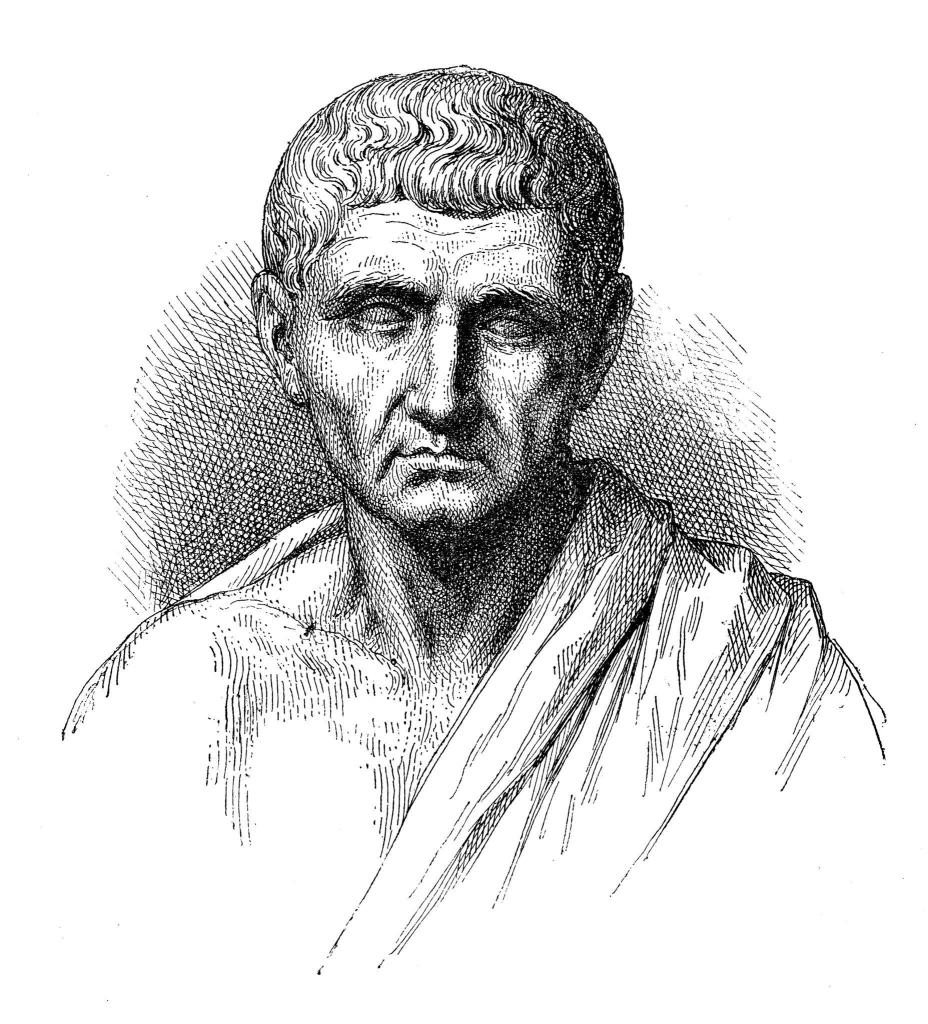
Aristotle, the greatest student of Plato and the man who tutored the famous Alexander can teach us a lot. He is the father of many disciplines—Logic, Political Science, Zoology, Rhetoric, and a whole bunch of others.
And Aristotle is probably the greatest philosopher of all time and a polymath who surpasses all and hence a worthy man to look into. Let us dive in—
- 1)Golden Mean in life
“Monks, these two extremes ought not to be practiced by one who has gone forth from the household life. There is an addiction to indulgence of sense-pleasures, which is low, coarse, the way of ordinary people, unworthy, and unprofitable; and there is an addiction to self-mortification, which is painful, unworthy, and unprofitable.
Avoiding both these extremes, the Perfect One has realized the Middle Path; it gives vision, gives knowledge, and leads to calm, to insight, to enlightenment.”—Buddha.
Aristotle and Buddha have something in common. That is the Middle way or the Golden mean. It is a powerful spiritual tool and a practical way to live life.
The mean path says to avoid extremities in life. Not to be a Hippie avoiding life nor a Materialist who’s sucked into life. Not to be a Moralist who doesn’t care about money nor a Capitalist whose life is run by dollars.
In life, not to show cowardice or rashness but a sign of reasonable courage, And balancing passions and reality. The idea is neither to be in excess nor deficiency but moderation.
Next time, someone snaps at you, don’t be silent or dynamite exploding on him/her but deal with it with reasonable disapproval.
- 2)What is good parenting?
“Those who educate children well are more to be honored than they who produce them; for these only gave them life, those the art of living well.”—Aristotle.
The Greek thinker opines that good parents educate children and that’s the only property that they can give which is worthwhile. A good inheritance is worthless unless your daughter is a woman of character and has prudence and probity.
Parents should teach what a good life is and how to be more empathetic and avoid being envious of others. And how to be more courageous, intelligent and compassionate.
A good education imparts humility and many virtues that act as a shield to evil vices around us. It shows how big a responsibility being a parent is and what matters to a child’s good governance of his life.
- 3)Intellectual Humility
“The more you know, the more you know you don’t know.” —Aristotle.
Bertrand Russel, who’s another giant head, wittily said that the stupid are cocksure while the intelligent are full of doubt.
Once you have a cultured tongue and a reasonable amount of ideas in your head, that should not make you arrogant. We mortals can never have knowledge that is full and complete. The more we empty the cup, the more we can fill as Bruce Lee would say. Despite so much advancement in science, we could not even unravel the nature of any single atom!
We are still 90% blind to reality and could just figure out some basic things to live.
Another part is to admit we are wrong. Graciously admit where you went wrong and how miscalculated the estimates and move on. Only cowards never accept the mistake. The brave and the wise know that out of 10 things we do, rarely does the number of correct cross 1.
Still, doesn’t have the guts? No problem, at least be the criminal in your court of conscience and do the inner sentence.
Oscar Wilde
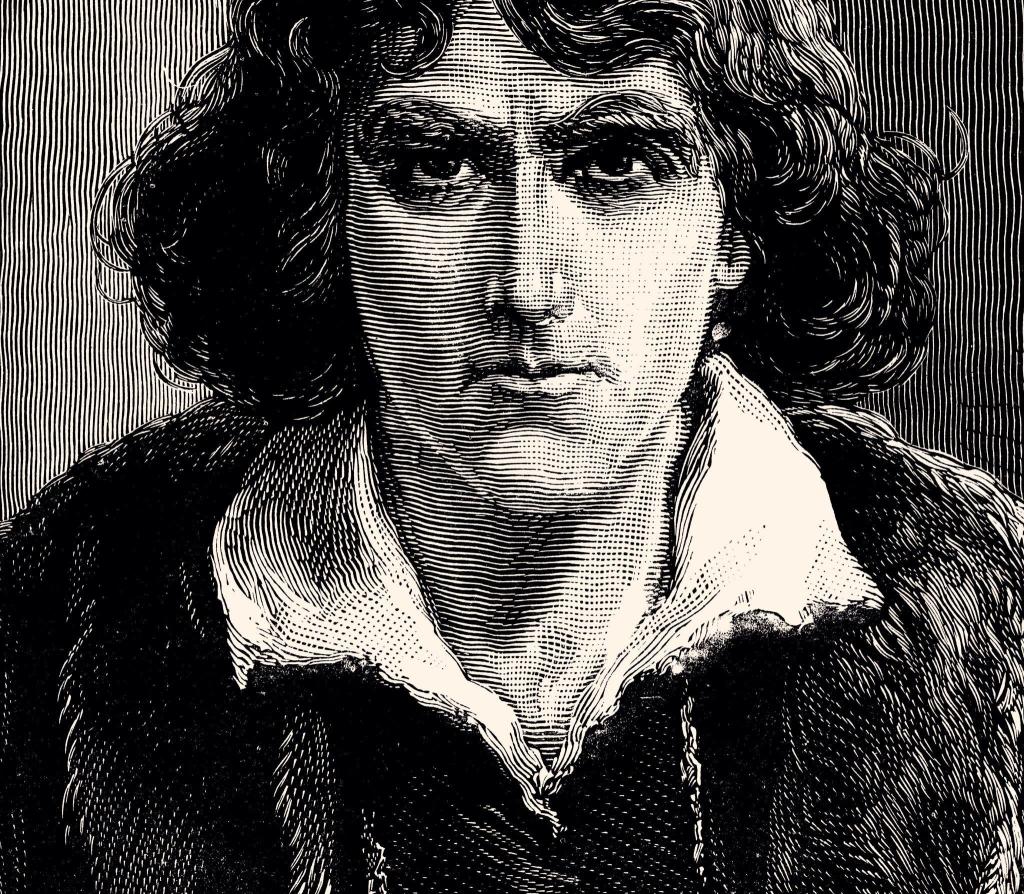
Oscar Wilde was the wildest writer that ever lived. There are some lines in his works that are so well expressed it’s hard to fathom how he could pull his tongue and mind to paint them on paper. A true genius articulator of human emotions, feelings, and grey perceptions. Here are some that stuck with me—
- 1) We are all in gutter, but some of us are looking at the stars
Throwing you sideways is the full-time job of life and none is left alone in the parade. Either your career kicks you out or a divorce or maybe health knocks you down. The problem varies but never the degree. A perfect Either this or that.
Some accept the fate that binds you, to use Marcus Aurelius’ lines. They sing, dance, fly in the gutter, and push the needle ahead despite the heavy storms that are across. Others simply become naggers. They keep nagging about the wild nuggets in life.
consequently, they miss all the bright stars in life. They don’t enjoy the things they already have in life—love, family, a good enough job, a friend to share whatever they want, a dog that keeps wagging its tail. Whether you become a stoic or not, at least keep this thing in mind—
“Objective judgement, now, at this very moment. Unselfish action, now, at this very moment. Willing acceptance – now, at this very moment – of all external events. That’s all you need.” —Marcus Aurelius.
Listen to the wise old king, and look at the milky stars that bring heavens to you.
- 2)To love oneself is the beginning of a lifelong romance
We cannot love someone unless we love ourselves first. You can project only what you are on others. Your heart is the best mirror out there. A broken, hateful, insecure soul reflects only division, loathing, and venom. That’s why to start a long romance, first heal yourself. You will do great injustice to yourself and the people around you if not. Lucille Ball puts it perfectly—“ Love yourself first and everything else falls into line. You really have to love yourself to get anything done in this world.” Your life depends on it.
- 3)No man is rich enough to buy back his past
Whatever happened has already happened. You cannot go back and change all the things that have already happened. In fact, they happened and then you happened. If they haven’t happened then you haven’t happened. It’s as simple as that. The past completes you. Longing for a new past means you are longing for a new self which means not you. Yin has a Yang. No exceptions.
Practice
Axe sharpening is the idea we all need to keep in our thick heads 24×7 or as Derek Sivers says
you have to keep earning your title or it expires. A writer should write, a painter should paint,
and an athlete should train continuously to keep peak performance intact.
A machine depreciates, and so does you. Being irreplaceable needs regular rehearsals.
Note down
Every time you get agitated, feel sad or experience the highest possible happiness especially
after you have done something, jot it down. Record everything, the peaks of joy and the
valleys of misery in your diary or Google Keep if you prefer journalling in digital space.
Once you begin to track, you will come to know the pattern. you will exactly know
what type of actions/thoughts easily irritate or elevate you. It need not be like
Anne Frank’s legendary diary, a simple book with scramblings and a bunch of ideas
will do the job.
Seeing
Wonhyo, the Korean Buddhist monk’s story is really fascinating and profound. One day, he embarks
on a journey to China to get wisdom from great sages there. On his way, he gets stuck in a
storm and is forced to take shelter in a dark cave. In there, he feels thirsty and in the darkness,
he stumbles upon a vessel that is filled with water.
Thanking the fates, he drank deeply from it, and with full belly satisfaction, he shuts his eyes.
The next day, he discovers that the vessel in which he drank water was apparently a decaying skull
with maggots and old leaves in it. And the cave was in fact a tomb with plenty of skeletons in
his company.
He tries to vomit out the water and runs away from the tomb. But suddenly he understands something great.
” Yesterday, my throat was longing to quench the thirst and the body needed water. So, I drank from
a bowl in the cave. Morning, I find that it was a skull and I was in a cave and just before the discovery
I was thankful that I had a place to rest and a vessel full of water. After the discovery, the mind
interpreted that a tomb is bad and a skull is a pure disgust. But the skull and tomb were always
skull and the tomb. Even when I am gone, they are what they are. Without my mind, things are
as they are. Perception tricks us from perceiving reality and projects illusions and values.
What we think and how we think, the entire stream of thoughts shapes the world and what
kind of world we live in. Everything arises from the mind and when the mind shuts off, the world shuts off.”
We live in constructed stories. When the interpretation and perception change, the world
we experience as such also shifts into something else. Living by the images made in the past
doesn’t let us see the present.
Fiction and Social agreement
If an individual believes in an illusion then he or she would be thrown into an asylum. But if collectively
as a society we put our faith in an illusion then it is real not a delusion or hallucination. We agreed
that a Rs.500 note despite being a cotton paper has the value of Rs.500 purchase hence it attained that value.
Likewise, we granted more value to a rock/mineral called gold and now it is more valuable than a hen or a goat.
Collectivity gives power to anything. A rock becomes god, a tree becomes a holy spirit, and a black cat, not black buffalo or blackbird is a bad omen. In fact, our beloved sports teams are simply massive lies
we choose to ignore. If 22 people play with a ball and few bats for some time on a ground then it
is cricket. If two people play with 2 bats and a softball over a grassy pitch with socially acknowledged
rules then it is a Wimbledon tournament.
If two countries put up fences, barbed wire, and men and women with guns and tanks over a place then that
is a border and we are supposed to be enemies with different flags and agendas.
Truth then is directly dependent on the quantity (Number of people who accept it) than the inherent quality.
Desires
Buddha, the spiritual master of India/Nepal, as we all know, commented that desire is the root cause of
all sorrows (Dukkha). This is one of the four noble truths which he highlighted throughout his lifetime.
Hence he asks everybody to abandon them and end suffering.
While it is hard for us to abandon our desires and wants, but we can be more conscious in picking the
desires that we naturally need, that is only the most desirable ones.
Taking in the “Mimetic desires”, the needs that we have in our minds only because of social
conditioning, marketing, and the cool factor unnecessarily put more burden on our humble backs.
Many of the times, desires are implanted by people in our social circle, though not directly
but with their actions when they buy a new model phone/car/clothes, which is easily picked up by
our brains and EMIs.
Throwing away the flimsy desires and replacing them with healthier-core wants is important
for happiness.
 Thy Vox