
The irony of success is
you don’t have time to cherish it.
The irony of failure is
you have all the time to feel it
till your bones soak in self pity.
—Twisted games.
The irony of success is
you don’t have time to cherish it.
The irony of failure is
you have all the time to feel it
till your bones soak in self pity.
—Twisted games.
I think writing reveals your ignorance. Before we begin to write we think that we do know a lot about something and think that we can actually communicate a lot to people. But the minute we begin to type or write on a paper, then the problem kicks in. In the mind, it appears that one has exceptional clarity on anything we usually think.
However, dumping down the ideas onto the paper shows whether we know or not. Of late, it has become a sort of litmus test for me to check intellectual arrogance. On the other day, I began to write a piece on socialism vs capitalism. I was confident that I can write good stuff owing to the fact that I read a lot. But words and ideas began to crumble the minute pen hit the paper.
The fact of the matter of course is quite obvious. Holding random thoughts and a few quotes of famous men and women is easy and takes no effort. Being disorganized is simple and no sweat. However, writing demands shape, order, and sorting out the wheat from the chaff which is way harder than it actually sounds.
And writing also insists completion of thoughts. But in the mental world, we never care about that. Half-complete ideas are okay and do not require an extra struggle to bring a nice closure. We can also simply shut them off or divert them. On the other hand writing tests your will and is a sort of fire that burns away your nonsense and puts a deadline and orders you to take a stand on the issue at hand.
Paper at all times demands a settlement of thought and it doesn’t accept half-baked cookies.

Under the load
of wisdom
we miss insights.
Under the load
of solitude
we miss love.
Under the load
of illumination
we miss the now.
Under the load
of driving
we miss moving.
Under the load
of deadlines
we miss the divine.
Under the load
of water
we miss the waves.
—Thus spoke the drunken monk.
Either
I have choice-less control
or
control-less choice.
—Drunken Monk.
Definitely not. Being a Dostoevskyian is sick and saddening. Why should any suffering have meaning at all? And we never search for meaning while we are happy. Is it to accept the helplessness and then seek some pride in it?
Friedrich Nietzsche says that what doesn’t kill us makes us stronger. But suffering rarely made any men stronger. Either they get used to it or become egotistical to accept that they too are weak and can weep.
Even after the Nth time, pain cripples us but humanity and so-called self-advertised strong men find it hard to swallow it.
This has a negative consequence—No one is seeking out help and is crushing their lives simply in the name of being stoic. This is a disease and a plague for us all.
They are dumping the waste into the subconscious and growing their Jungian “shadows” and society is raising sociopaths in the name of strong Spartans.
Acknowledging this can heal the sore souls and spoiled spirits. It’s time to stop searching for meaning in martyrdom and affection in affliction.
Once you have built momentum, don’t break it. Save it at all costs. Avoid the empty-zero days where you do nothing. If the task that you are supposed to do is damn hard, then at least do 10% of it. The 100 push-ups are hard but we can pull off 5 push-ups that day when the motivation is quite low. Sickness might not push you to write a lengthy essay, however, try to aim for 50 words. The point is not to make you proud but sustain the work so that you can pick it up tomorrow.
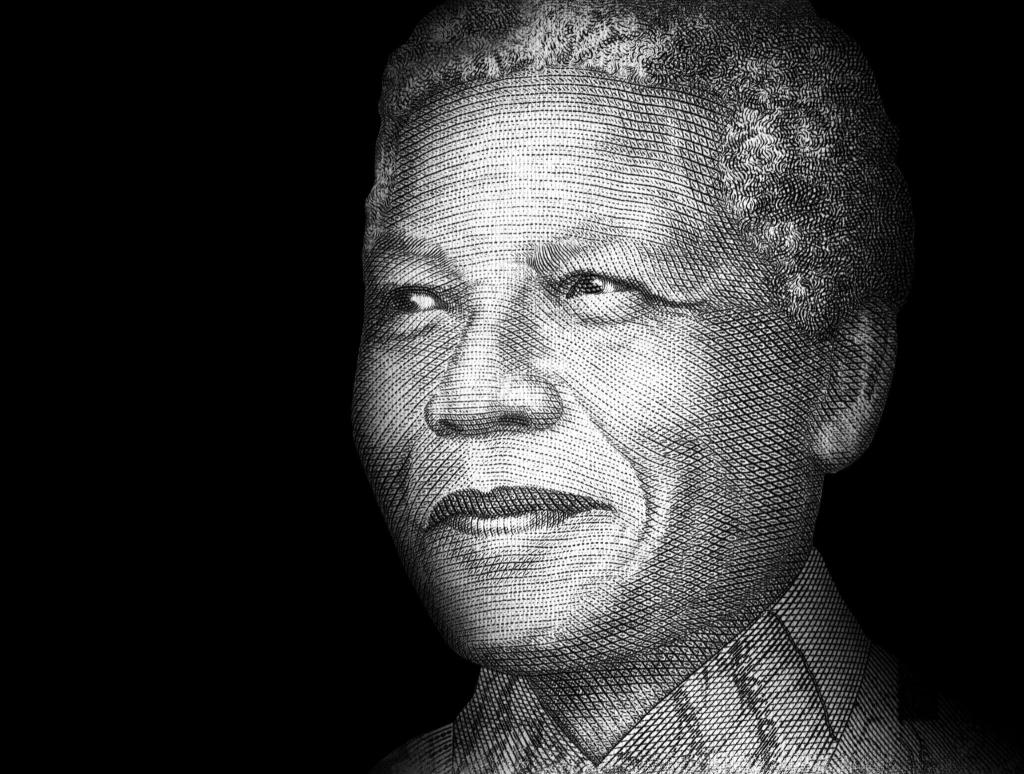
Nelson Mandela is the first black president of South Africa. But that’s just a Wikipedia fact. What we should think about Mandela is how well he lived his life, how he could heal his hating heart, and how he faced his fears despite life’s grueling setbacks and a prison term that would crush him and throw his dreams into an impossible pit.
His “Long Walk to Freedom” teaches how to be optimistic, how we learn to hate others, how a nation should act, and how to lit the kindness flame that burns in all our hearts. His life is a valuable book that one can learn if one opens the mind a bit. Here are the seeds that I value—
One fundamental error in our thinking is that we assume being courageous means no fear and showing a spartan face. But that’s far from true. Courage is coping with fear and waging a constant battle that we never win but only make sound peace with it.
It’s an honorable pledge that we take. Yet we cannot defeat. The example is the man himself we’re talking out. When Mandela was flying on a plane. The engine failed and everyone was in panic mode. His bodyguards were running around with fear. But Mandela was reading a newspaper with courage. But here’s the thing Mandela after the emergency landing admitted that there was a fear but he merely did not show it.
This shows that being courageous is a choice that we need to make and can never defeat like a big Hercules.
“Courage is resistance to fear, mastery of fear, not absence of fear—Mark Twain.”
We never get
Either this or that
But
A choice hanging
In between.
We never get
Neither this nor that
But
A paradox moving
Up and down.
We never get
A personality or
An individuality
But
A docile identity
Buttered by both.
We never get
Kinky morals or
Dinky ethics
But
A badly blossomed conscience
Or deeply twirled dilemmas.
We never get
A hulky heart
or
A bony brain
But
Just a sad belly.
Ah—
Black or white?
I wish it were that simple.
—No black and white
This is a poem I wrote a while back that captures the idea well. Life is neither black nor white but grey. We need to accept the contradictions, the ifs, and buts, and tread along.
Nations accept this. For example, it cannot follow ruthless capitalism or ruthless socialism. Hence they balance out like China by following Market Socialism.
Life is an ethical dilemma with not a yes or no. But a yes-no. No wonder, Soren Kierkegaard remarked—
“I see it all perfectly; there are two possible situations — one can either do this or that. My honest opinion and my friendly advice is this: do it or do not do it — you will regret both.”
We know the famous quote of Mandela—
“Education is the most powerful weapon which you can use to change the world.”
But the idea of Mandela is much more than that. Education brings out the best in you. It’s the best weapon we can use to battle against the raging hate in our hearts and purify ourselves.
That’s why he inspired many prisoners to read and as they say— He turned the cell blocks to study halls and made Robben Island a university.
And education, Mandela believed, saves democracies, protects the rights of people, and tames unethical leadership of so-called good men and women. As hatred of immigrants, blacks, and the vulnerable are on the rise and people easily fall prey to a demagogue, education is the stick to control it.
and about education and personal development, here’s what Mandela says—
“Education is the great engine of personal development. It is through education that the daughter of a peasant can become a doctor, that the son of a mineworker can become the head of the mine, that a child of farm workers can become the president of a great nation. It is what we make out of what we have, not what we are given, that separates one person from another.”
Pick out that book on the kindle or if you prefer the old way, then the shelf.

Craig Wright is a music professor at Yale University. Despite a good work ethic and crossing 15000 hours of practice, his piano career didn’t take off as he expected and didn’t end up becoming a genius. He couldn’t become a Mozart, so he studied him. Trust me, he studies for over 20 years. Then interested in it, he started to look into other geniuses like Leonardo da Vinci and the list went on. This led to his now remarkable book—The hidden habits of Genius.
Here’s the wisdom of it—
Craig came with a formula to define genius. It is G= S*N*D, G equals significance(S) of the degree of the impact or change affected times the number(N) of people impacted times duration(D) of the impact.
It is clear that Craig classifies a person as a genius only when his/her idea impacted millions of people and the wide world for a long time. In other words, he prefers Alexander Fleming over Kim Kardashian.
Habits of Genius
Gifts are given and you might have innate talents but they automatically won’t make you a genius. Becoming a genius takes an immense amount of hard work and discipline to use your talents.
“If people knew how hard I had to work to gain my mastery, it would not seem so wonderful at all.” —Michelangelo Buonarroti.
In short, there are no lazy geniuses.
This is because when you are a woman or from a minority community. You need to cross social barriers, no matter how insanely gifted you are. This can disappoint people but this is the truth. Jane Austin had to publish Pride and Prejudice anonymously to get through. This is not some old societal notion but a modern one too. J.K. Rowling was told to disguise herself as a man.
“As long as she thinks of a man, nobody objects to a woman thinking.” —Virginia Woolf.
Things are changing but upcoming geniuses need to cultivate mental resilience to face the world that is not a bed of roses yet.
“The difference is that geniuses create. They change the world through original thinking that alters the actions and values of society. Prodigies merely mimic.”— Craig Wright.
The point is geniuses create new and innovative things, solutions or a groundbreaking theory. Einstein, Mozart, Darwin, Gandhi, Picasso, all were “the originals.”
Work to create something novel and connect the dots like never before and you will be on your way to be a genius.
“I am enough of an artist to draw freely upon my imagination. Imagination is more important than knowledge. Knowledge is limited. Imagination encircles the world.” —Albert Einstein.
Why child-like imagination especially? It’s because their imagination has no barriers. Mary Shelley, J.K.Rowling, Einstein, Picasso, Darwin, Walt Disney all built castles in the air and played with the ideas with insane imaginations and visuals. No wonder Charles Baudelaire commented that Genius is only childhood recovered at will.
Leonardo da Vinci has been called the most relentlessly curious man in history, Marie Curie was puzzled by radiation and Nikola Tesla even shocked himself.
Benjamin franklin, Charlie Munger were all bookworms, book-eagles who hungrily devoured the knowledge. And Elon Musk ran out of books at the school library and neighbourhood library at age 10. Sometimes he use to read 2 books per day!!!
So sign up for that EdX course or take that masterclass subscription you have been thinking about and be a learning machine.
“The education of a man is never completed until he dies.” —Robert E.Lee
Geniuses are rebels who try out new ideas and can diverge from popular opinions of the time and they have cross-disciplinary thinking.
They can mix STEM with arts and humanities and cross-pollinate different fields and their ideas. This allows you to have multiple tabs open in your mind and we can draw different gems from different mines.
And finally, don’t just concentrate but also relax. When you relax you get so many eureka moments. Hence showers are the best!
“All the really good ideas I ever had came to me while I was milking a cow.”—Grant Wood. Go, take a walk.
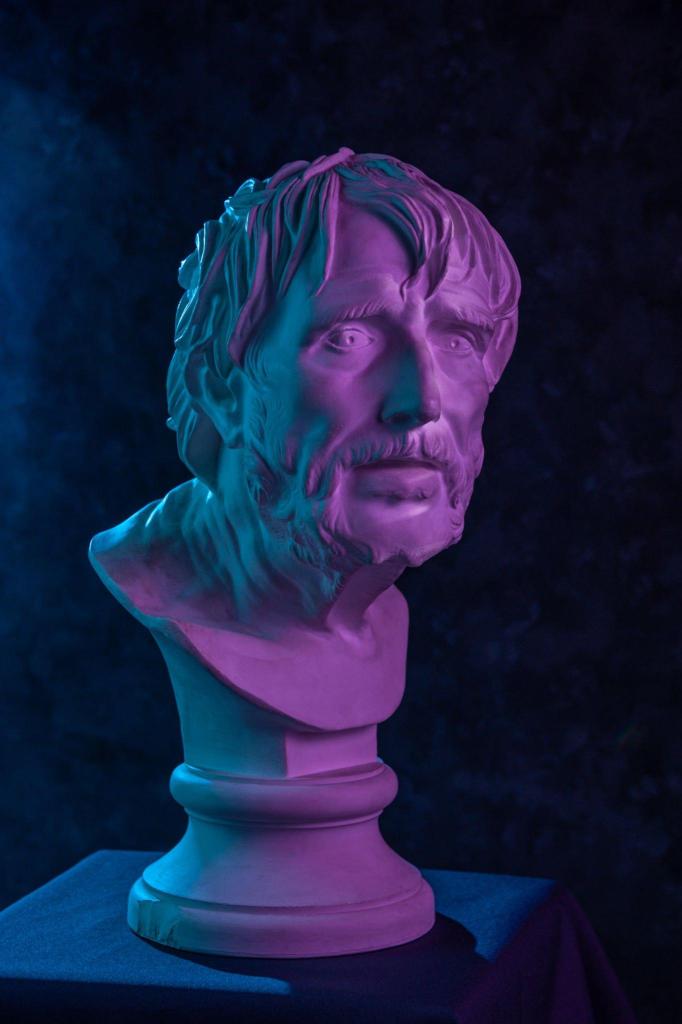
My brother gave me “On the shortness of life” book to read a while ago. This book though a short one changed the course of my river. Seneca’s brilliant words pierced like a thunderbolt though I’m not a stoic as such.
I never knew that there was such a thing called as the “Art of living” until I met this great thinker. It inspired me, it brought an existential crisis to me, and in a way crucified and resurrected me.
And it also brought a sense of urgency to my hibernated-slumber life. And every page of the book washed my soul and put me in deep meditation and contemplation. Here are a few of them for you to burn the flame—
This sounds contradictory to the title of the book but this is the first truth that Seneca hammers on your head. He says—
“It is not that we have so little time but that we lose so much. … The life we receive is not short but we make it so; we are not ill-provided but use what we have wastefully.”
We waste so much time on things that don’t matter or on things that don’t matter now. We feed on Insta posts, drink YouTube scrolls, and sleep on Netflix-ing. If that’s not enough, we binge-envy on others and reflect for far too long on why life sucks though we exactly know why it does.
In fact, we tik tok our lives and finally think on the deathbed—How has life gone by?
That’s why Lucius Annaeus Seneca pushes you to grab hold of your time and act like a mortal who is a simple slave to the silly fates.
“Often a very old man has no other proof of his long life than his age.”—Seneca.
This is a saintly saying if you think about it. Long life doesn’t mean we add more numbers to our life but add more meaning to them. Consider Indian freedom fighter Bhagat Singh who was hanged at 23 or Bruce Lee who died due to Cerebral edema(That’s what Wikipedia says) at 32, they didn’t become oxygenarians or nonagenarians but their life was well spent.
Both changed the world in ways we cannot. And that matters a lot. The mere existence and sleepwalking to our tombs won’t do any good either to us or anybody.
Every living minute of our life should have some wonder and awe like a shining star.
I’m talking about intellectual parents, not birth parents. Seneca says that we can choose to be educated by brilliant minds and great thinkers of history.
History is full of philosopher kings and queens, realists, and stellar rebels who can teach us a lot. In other words, you can choose your mentor and be a mentee by sitting in libraries or swimming in the pools of wisdom.
Pick the classics and have talks with Plato, Aristotle, Kant, Buddha, Confucius, Lao Tzu, Hannah Arendt,and Simone de Beauvoir and forge yourself under their guidance and light.
“You should rather suppose that those are involved in worthwhile duties who wish to have daily as their closest friends Zeno, Pythagoras, Democritus and all the other high priests of liberal studies, and Aristotle and Theophrastus. None of these will be too busy to see you, none of these will not send his visitor away happier and more devoted to himself, none of these will allow anyone to depart empty-handed. They are at home to all mortals by night and by day.”—Seneca.
This is the true “Walking with the dead,” we all should do.

Brendon Burchard is regarded as the world’s leading high-performance coach and an excellent writer who topped the New York Times list of best-selling books 3 times. He is often quoted, googled, watched, and googled on the internet by productive bees who want the best in their life.
His online courses and videos crossed millions and Oprah Winfrey consider him as one of the most influential personal growth gurus of all time. Most people know him through the Brendon show, a wonderful podcast if you want to listen.
There’s a ton to learn from him and here are a few of my favorites—
Brendon says that most people never own their ambitions 100%. This is a powerful idea and a truth. We usually own it a 50-60-70%. For instance, you want to write a book, run a blog, make YouTube videos and inspire millions of people online and you invest your resources and time in it but we do it half-heartedly. We don’t accept it but deep down you know it in your bones. I failed many times to do hard things like building a rock-solid body, and write a novel. Sure, there are many reasons why I failed but after a lot of reflection, I think Brendon is right.
With just 60% ownership and liking, dreams are hard to come by. So never do this mistake. Chase your dreams only if can own them 100%. Here’s a nugget for you—
“personal power is directly tied to personal responsibility, which most people avoid.”(Brendon Burchard)
Brendon comments that guilt is a sign of learning and the first indication that you have a growth mindset. Trust me if you don’t feel guilty after binge-watching that Tv series all night, there’s something seriously wrong with you. If you failed to make that blog post deadline possible, you should think and feel about it. That’s how you realize what your next baby steps are.
I always feel bad when I procrastinate on my Wednesday essay day. But guilt makes sure that I write the next day itself. Own guilt and achieve your dreams by course correction.
“You have a clean slate every day you wake up. You have a chance every single morning to make that change and be the person you want to be. You just have to decide to do it. Decide today’s the day. Say it: this is going to be my day.”—Brendon Burchard.
Every morning is a choice to bring positivity to your life. No one can come inside your head and clean it. And positive thoughts won’t come unintentionally. You have to do it deliberately. That’s because the human brain is hardwired to create fear and anxiety. So the machine’s job is to constantly chase you down with 0% probability issues.
This man is worthy to be followed and taken note of him. Go ahead. Great ideas can move you, only if you let them.
 Thy Vox