Walking and Women Empowerment(Essay)

Credits: Canva

Biological Anthropologist Alice Roberts opined that if one needs to sum up the crucial difference between apes and humans in just two words, then they would be: Brains and bipedalism(Two-legged upright motion).

Walking upright on two legs that too habitually separated us from the other apes roaming around the jungles. This motion made us take a U-turn. As noted by Jeremy Desilva in his book “First Steps”, this new way of moving gave problems: making giving birth more painful, slow running speed, flexible but fragile spines, and a lot of ailments like hernias, sinus, and knee issues.

However, it proved us with noteworthy advantages that are too hard to miss. Freeing up of limbs led to the expansion of sensory and motor brain areas, standing up stimulated visual areas more often at the back of the brain, and restricted vaginal canal due to the changed structure of the Pelvis created new openings called Fontanelles (For compression) in the brain to let the baby pass through the birth canal which subsequently causes a massive increase in the size of the brain (Not so for chimpanzees and bonobos), energy efficiency, better thermoregulation, carrying capabilities and empathy.

Walking especially the long ones makes the heart pump faster and circulates more blood and oxygen to the brain, promotes new connections between the brain cells, stimulates neurons and alters the volume of the hippocampus in a good way and kicking spatial intelligence.

Creatives, thinkers and long-beard philosophers knew for a fact that walking makes us brainier and smarter. Hence the long walks. Henry David Thoreau says—“ The moment my legs begin to move, my thoughts begin to flow.” And Friedrich Nietzsche goes to the extent of saying that “ Only thoughts reached by walking have some value”. Math nerds know how William Rowan Hamilton could come up with his equation (Complex Numbers) over a walk along the royal canal in Dublin.

If this is the case and walking is the superpower that made all the difference for humans then it raises a serious issue here. We have been denying this advantage to women under the name of patriarchy. By confining her to the four walls and making her prisoner in the home, this “fundamental right to braininess” is denied to them. Simon de Beauvoir in her seminal work “ The Second Sex” points out this indirectly with her words—

“ One is not born a genius, one becomes a genius, and the feminine situation has up to the present rendered this becoming practically impossible.” Continuing it, she adds further, “ Woman is shut up in a kitchen or a boudoir (bedroom) and the astonishment is expressed that her horizon is limited. Her wings are clipped, and it is deplorable that she cannot fly.”

This point to a direct correlation between walking/mobility to women empowerment. That means women breaking up the glass ceiling, and climbing up the ladders of social mobility too is dependent on their ability to walk and stroll across the park without gazing eyes.

Nari Shakti (Women’s Power), then, begins with putting on shoes to their feet and take the leap. That one small step could be a giant leap for womankind, paraphrasing Neil Armstrong.

—Go out and walk. That is the glory of life (Maira Kalman). And we should let women do that more often.
4 Things Bruce Lee wanted us to know.

Photo:iStock

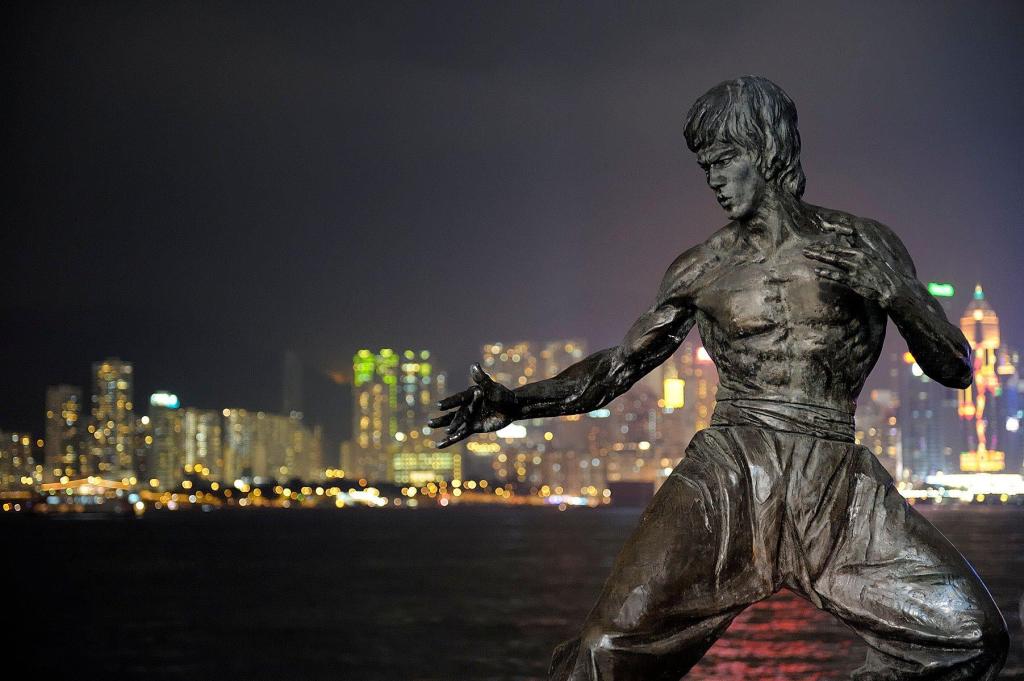
Bruce Lee is a name that needs no introduction. A world-class martial artist and surprisingly a world-class philosopher too. Time magazine named lee one of the 100 most important people of the 20th century.
We still binge-watch his movies and get dazzled by his cool moves.

But it’s time to dive into his enigmatic, jaw-dropping philosophy that can change our lives.

  • 1)Emptiness, the starting point.

“In order to taste my cup of water you must first empty your cup. My friend, drop all of your preconceived fixed ideas and be neutral. Do you know why this cup is so useful? Because it is empty.”—Bruce lee.

Bruce Lee is famous for this empty cup analogy that he picked up from zen philosophy. This one is a stunner concept to adopt in our life. With a fixed and overflowing mind, all you have are preconceptions, prejudices, and stereotypes. You are never in student mode and this stops learning and growing.

With a full cup, people are not ready to learn but only want to defend their ideas and position. This rigid mindset will limit us and confine us to the cup, like a frog in a well.

  • 2)Flow is the way of life.

“No man ever steps in the same river twice, for it’s not the same river and he’s not the same man.” —Heraclitus.
Heraclitus also says that change is the only constant thing in our lives.

This was well adapted by Bruce lee in his life. Like water, he asks us to be in a flow, ready to accept the object that gives it the shape and form.

Everything passes away or as Shakespeare puts it in Hamlet—This too shall pass. That sad breakup hangover is not going to last forever and that happy feeling of job promotion also will not last either.

Stay with the change and you shall grow. If you obstruct the water, you become rusty and polluted.

  • 3)Concentration is the root.

“Concentration is the secret of strength.” – Ralph Waldo Emerson.

Bruce Lee sees concentration as the root of all the higher abilities in man. As technology is growing at an alarming pace, our concentration abilities are falling off the cliff.

As the famous study points out we have an attention span less than the goldfish. After just 8 seconds, we are distracted away. That’s why it has become hard to do meditation even for 5 minutes regardless of the app we use or the program we enroll into.

Humans have built civilizations and now are venturing into space to colonize them. But if we cannot compete even with a goldfish, then the problem is too serious to ignore.

Master the combative arts of Lee but first, be attentive.

  • 4)The point is doing.

“The doer alone learns.”—Bruce Lee.

The only thing that matters is action and nothing else. The mere talk will not bring accomplishments and lee says that the surest way to learn something truly, that is, to get master knowledge not chauffeur knowledge, as Charlie Munger says, is to get some real action.

This is also supported by science—the way of kinesthetic learning. Hands-on learning by action helps a lot more than you assume.

Moreover, action can be meditative and acts as a medicine and antidote to our thought paralysis. Action liberates the soul and gives you strength which the thoughts cannot, no matter how noble they are.

Welcome the way of the dragon.


Purchases

Imagine you have tickets to the FIFA world cup final. You have two options, either go to the stadium
with the family and a mug full of popcorn or sell the tickets at a higher price and cash in the money
and probably buy iPhone 15 max pro.
The best option is always to take the first one. Go to the match with your folks and earn a lifelong
experience that you can brag about in every conversation and small talk we have with strangers. Things
by the law of nature and our usage depreciate and can be replaced by the latest models but it’s next to
impossible to purchase an experience in the market that brings you joy and happiness and the more you share
with people the more it grows and never depreciates until we leave this mundane earth.

So, Collect experiences and not cool gadgets, if there’s a choice.


Changing

Many of the new year resolutions often are failed within the first week itself, Whether it is
hitting the gym and eating healthy food or saving money to invest in a stock or real estate. The reason is
given by Carl Rogers, a humanistic psychologist.

We initiate a new change or take a decision to alter something without understanding completely
what we are trying to change and the reason why we landed up in a mess in the first place. For example,
most of the eating disorders and associated obesities are directly linked to mental health issues.
No one takes the time to recognize the underlying causes of it or why are we eating excessively
beyond the cravings and what kind of stress is causing us to gobble up the food and why we are not
so mindful while having the food, so on and so forth.

Change is actually a gift that comes naturally once we pay complete attention to the problem and
understand ourselves completely. It shouldn’t be forced upon us, this is what the motivation
industry fails to get it. After this grasp over the entire issue, we need to completely accept
ourselves and not live in self-denial mode via addictions like alcohol or drugs. Here one more
thing to keep in the mind is evaluation should be done by us and not by others. We are each
the final judge of what’s best for our good.

Understand, evaluate, accept and change, this is the mantra.


Nietzsche’s Camel (Short-Essay)

Photo: iStock

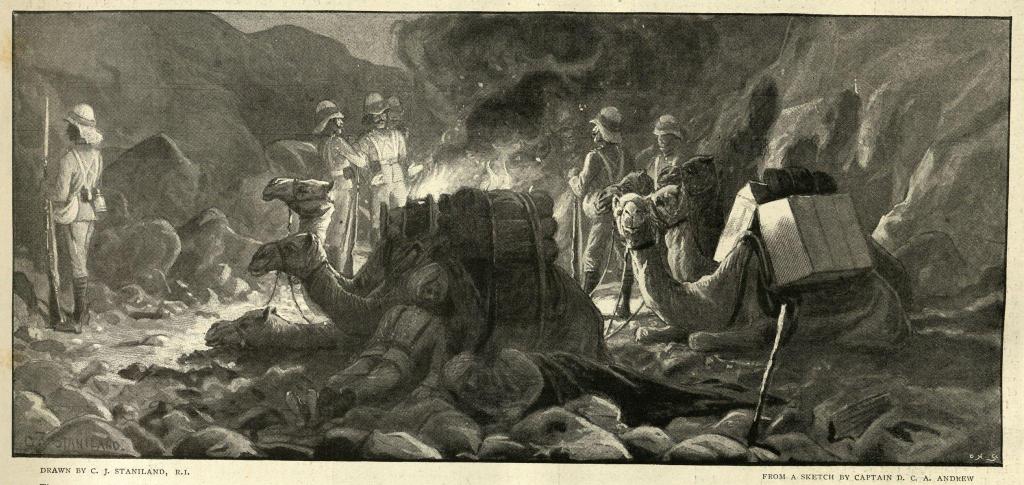
Friedrich Nietzsche in his easily-put-down-able “Thus spoke Zarathustra” compares the ordinary crowd to a camel. The camel carries irrational wisdom and a load of stupidity without any rebellious reaction.

The morality, then, questions none of the belief systems, or grandeur but loose ideas, and undigested education on its back without any humble questions at all.

And the camel has values of religion and the words of priests, scriptures, and dead gods on the tongue. Of course, for Nietzsche, it soon ends when the camel metamorphosizes into a lion, a being that can rebel and unburden the weights of the past for the sake of love and freedom and to full fill the quest of Superman.

But in the practical world, the metamorphosis rarely happens. Consider our education which puts “the wit and wisdom of legends” in our minds with rote memorization and mark sheets always chains us to stand on the “shoulders of giants”, to use a Newtonian phrase. The Socrates in our mind never comes out to raise the school uniformed hand in classrooms.

We at least expect a dialogue-debate-discussion in university but the dumping of the Himalayan syllabus down the throats of students doesn’t give us a chance.

and the parenting, often a helicopter parenting, too thrills when the child is a camel, in our case, literally by carrying loads of school bags filled with classics(class-notes) that a child never opens.

The orchestrated labs never have lions in them nor a child( Nietzsche’s ultimate state of mind) that can curiously play with the chemicals.

obviously, camels continue old traditions. We were that camels who burned women alive in the name of “Sati”, deny entry to temples if found to be menstruating, and practice female genital mutilation.

The elephant in the room here is the bag of karma that dictates every atom in India. This camel-ness, for a lack of a better word, keeps India in the past and not in the future of space travel or quantum fields.

Here, Lionisation, again for a lack of a better word, doesn’t mean aping the west as we have been doing for quite a while now or making science a new religion or creating “materialistic philosophies” but taking independent paths, putting aside the “matrix” of the rut and consider letting in new winds into the hearts and minds.

Perhaps, Mahatma Gandhi puts it right this time—

“ I do not want my house to be walled in on all sides and my windows to be stuffed. I want the culture of all lands to be blown about my house as freely as possible. But I refuse to be blown off my feet by any.”

Thus spoke “I”.


Boredom(Essay)

https://pixabay.com/illustrations/hand-girl-light-surreal-cartoon-5879027/

The culture of productivity, the ideology of capitalism, and the mimetic desires of a man in the Anthropocene make boredom an unforgivable sin. Clocking the maximum hours and the hustle mindset of the workers with complete alienation of self (Karl Marx) is the path for proletariats with laptops.

The solitude and idle sitting have become vices and the conditioning of 9 to 5 makes one feel guilty if he/she dares to skip a second. The conscience and self-censorship (Micheal Foucault) will punish us for the sin of wasting time. An alarm goes off with a warning to get back on the track.

In fact, now, collectively as a species, we have become afraid of boredom, as exclaimed by Bertrand Russel in “The Conquest of Happiness”. Instead, the rat race, fueled by corporate lords pushes people into the hedonic treadmill of consumerism to get instant doses of dopamine.

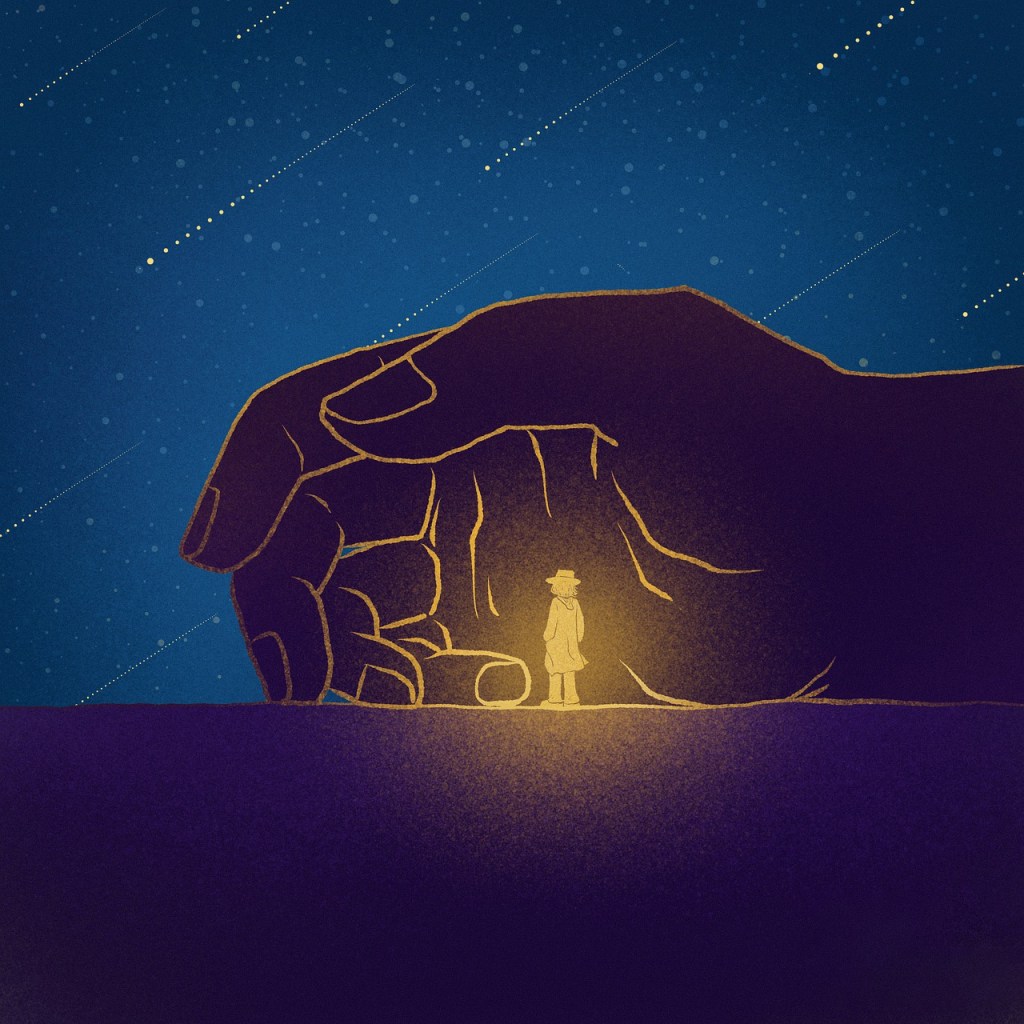
Our busyness which often is forced distracts us from living and solving “Bigger problems of life”. Because only we are conscious of our existence and its drama, it naturally becomes our part-time job if not a full one to solve it. Erich Fromm wrote in “Man for Himself” that man is the only animal for whom his existence is a problem that he has to solve and from which he cannot escape. Only boredom and the process of it all give us a mediocre chance to solve a few existential questions in our life and at the least give us a defining philosophy to live according to his own terms.

That’s why Kierkegaard offers the virtue of “idleness” and Adam Phillips gives his notion of “Fertile Solitude” as necessary for life. It can spur creativity, and mindfulness and unlock profound questions. This is denied to people nowadays.

Walter Benjamin (Illuminations) calls out our allergy to boredom as a particularly perilous affliction of the Information Age. The consequence of it is best put by Bertrand Russell—

“A generation that cannot endure boredom will be a generation in whom every vital impulse slowly withers, as though they were cut flowers in a vase.” No wonder, Ralph Linton laments that all cultural advance derives from the human capacity for being bored.

Boredom offers a tiny space for reflection, and rejuvenation if one can embrace it. Without any pause, the constant stimulations will break us down and we won’t question the same old stuff we have been doing again and again without any reason simply for the sake of it. (Sisyphus Existence) Knowing this, Jews curse someone if they want to with the line—“May you never be bored.”

Boredom, then, needs a closer embrace and we have to put up with it and not treat it as a biblical sin. Boredom is a perfect prequel to new things in our life. It represents our desire to “create” and seek newness and weird things. Kierkegaard says—“The gods were bored; therefore they created human beings.” See, gods are no exception to boredom and humans have come out of it.

Hence, dear Sapiens, surrender to boredom.


Jonah Complex

Let us assume a teacher in a film school asked this straightforward question – ” Who here thinks that
they will become the next greatest director of world cinema?”, many would laugh, giggle and
turn around to see if anyone was stupid enough to raise their hands, right?

You might be feeling there’s nothing wrong about it and students are in fact humble enough to assume that they won’t be
great and appreciate them. But Abraham Maslow thinks that this is a serious psychological problem which he called as
the Jonah complex, named after the same biblical character.

In the biblical story, God commanded Jonah to go to the city of Nineveh but he goes against the wishes and instead
tries to go to Jaffa. Jonah evades the responsibility of his duty and the chance to fulfill his potential and later
pays the price by being stuck in a whale’s belly for three days and nights. of course, god rescues him and Jonah goes
back to Nineveh and so on. but Maslow takes the story and points out the main problem here.

Many of us, like Jonah and the students in the film school, try hard to evade the responsibility we have
to pursue our greatness. we fear the highest possibilities we can achieve. This could be out of
an inferiority complex, fear that people might think you are arrogant or prideful or foolish, and the hate
or resentment we get if we try to dream big, whatever might be the reason, we try to evade our own
destiny by calling it humility and run away from one’s best talents as observed by Maslow in his book-
“The Farther Reaches of Human Nature”. And we miss our call, destiny, and life’s purpose.

The point here is not that you are a genius simply stuck in phobias or aren’t man enough to face the realities of life but
to be aware of our own potential, greatness, and latent abilities that we put aside due to fear of hardships we encounter
in pursuing the path of excellence.


Maslow and Creative Endeavours

Abraham Maslow, the world-famous psychologist who came up with the “Hierarchy of needs”, which stated that man
primarily crave to fulfill his physical/physiological needs (Food, Thirst, Sleep, and Sex) first and
then move on to aspire for Psychological needs (Love, respect, and so on) and higher Self-actualization
needs like creativity, morality, and reaching one’s own potential, also talks about two important
types of creativity – The primary and secondary which are often ignored.

Most of us have an idea, sometimes a great one and sometimes we fall flat but still do have some sort
of inspiration to create something. This, he calls primary creativeness. The inspirational phase to
build/make might be a result of a peak-flow experience or simply a thunderbolt strike of thought in the shower.
the point is having a remarkable idea doesn’t mean we actually engage with it and develop it into a
worthwhile product or a creative object. Maslow notes that 80-90% of thinkers or artists are stuck in
primary creativeness and don’t actually venture into secondary creativeness where we put in the hard work
and grit to process the idea, build layers to it and finally make it happen.

Edison captures it perfectly when he says – “Genius is 1% inspiration and 99% perspiration”. Newton after
being hit by an apple and an idea about gravity still had to work very hard to develop a full-fledged theory.
A music director will have the tune but not the whole song to listen to unless he hits the instruments
and a singer to amplify that with an ear soothing voice. Hence the ideation phase is just half the job
the rest of the creation is often a long road of grinding and commitment.


God and Ungod(Essay)

Photo by Pixabay: https://www.pexels.com/photo/crucifix-illustration-208216/

For the average Joe, Watch is a humble device to know about time assuming that it is a simple analog one. Not so for William Paley. In his 1802 work, Natural Theology, he held that as the existence of a complex watch compels our belief in the existence of an intelligent watchmaker, so does the existence of complex life forms, which compels us to believe in an intelligent creator(In this case, a god) for its design.

The logic is complexity cannot arise and exist in nature without the hand of an intelligent being(God). So, all of space and its “stuff” is the result of a watchmaker’s engineering skills.

Then came a man who turned up the notch. Charles Darwin, the dear lord of all scientists, with his “On the Origin of Species”(1859). He argues, by taking into account living creatures, that life was not designed by choice instead it had evolved by chance. New species arise naturally by a process of evolution rather than having been created by a god. That was the wisdom he acquired in the infamous Galápagos Islands. Thus the theoretical fight club began with science and religion throwing logical/faith punches at each other.

In 1986, probably deliberately, Richard Dawkins borrowed the same Paley’s analogy and wrote the eyebrow-raiser—“The Blind Watchmaker”. He attacked the god-made-the-world’s notion with his computer models and stated that the Darwinian worldview was the only possible explanation for our existence and it is the only theory that could solve the “mystery of our existence”.

Obviously, the other side too didn’t rest.

Michael J. Behe, a professor of biochemistry came up with “Darwin’s Black Box: The Biochemical Challenge to Evolution”. He opines that the many biochemical systems indicate the presence of intelligent design rather than evolutionary processes with his “irreducible complexity” theory. He takes the mechanisms of blood clotting, the immune system, and several others to prove it. Michael basically uses all the black holes in Darwin’s theory and fuels the fight.

However, it’s pointless to argue over this. Neither human intelligence with all its subjectiveness and narrowness nor faith mixed up in parables alone can solve it. We need both fact and fiction(only a metaphor here).

Even if we pick sides, say for argument’s sake, there is an intelligent design behind all this. Philosophers with their old hats come with the question of “Purpose”. The issue of “what’s the purpose of it all?”. Then we know how Soren Kierkegaard and Albert Camus wrote of the “Absurd” and so-called “Sisyphus existence” and the “Existentialism Nausea”, that Jean-Paul Sartre talks about. They question the very existence of human beings and the meaninglessness of life. Then a new debate kicks in.

And if we pick the side of science, mere quantum physics is enough to reveal the complexity and the big question mark over our heads. And the humility it imparts is breathtakingly big. In fact, as someone rightly said, the more the universe seems comprehensible, the more it seems pointless. Things get more interesting once the alien life is found.

So, it’s better to move on. What Gould said in his 1999 book, “Rocks of ages”, is the way ahead, at least for this essay—

“There’s a proper sphere for religion and there’s a proper sphere for science and they don’t overlap. Isn’t that great? We can all be friends.”

Let’s end it that way.


The Cosmic Perspective

Neil deGrasse Tyson, the physicist with starry ties and a nice haircut gives this amazing
perspective for us to consider in order to humble ourselves which we rarely do
as we assume we are the center of this damn universe.

The earth is a simple pale blue dot, as remarked by Carl Sagan, in the vast universe. In the
midst of billions of stars, planets, and galaxies, black holes, we are nothing, to be
outrightly frank. The tininess is truly terrifying.

Another dimension of this perspective is that we might not be alone in this universe. There
are many Goldilocks zones that could host life, probably even more intelligent ones than us
who can colonize and command humans. Yes, stronger like Superman/Thanos.

If the scale of our existence and the scope of other life outside this rocky planet can put
some modesty in the minds of whole humanity itself, then what am I but a puny inflated ego?