
Before deciding something, first, check whether your preconceived notions and assumptions are true or not.
For instance, when everybody assumed that people cannot listen to 3-4 hour-long podcasts, Joe Rogan stopped
and challenged this belief. He asked the question what if the opposite were true?
Henry Ford used to emphasize this thinking a lot. In fact, if a candidate when taken on lunch by him
automatically puts in salt and pepper without first tasting the soup then he used to reject them as the employee
assumed that chef hasn’t put in the right proportion based on some hunch or previous non-relatable experience from
a different restaurant.
Likewise, we assume that a person isn’t valuing our friendship or some sort of relationship when he might be
plainly busy or stuck on a deadline to finish a project. In businesses also, don’t assume that customers
don’t want your premium product or service when instead your marketing was poor and most of them do not know about it.
Giver and taker
Be both in relationships. Don’t always give or receive. When you always give you get a feeling of pride
or start to see the other person as unequal or stop learning from them. Likewise, when you always receive
you feel entitled or don’t make any effort to bring value into their lives which again hurts the relationship.
Switch freely across the spectrum without any inhibitions.
Problem Perspective
It is easy to fix when you are the problem or when you have the problem. On the other hand, it’s quite hard
when the world is the problem or when the world gives you a damn problem. Wish that you always have the former ones
and not the latter ones.
Cheering up yourself or fixing your mood by eating your favorite food or talking to someone else across the table
is way easier than fighting racism or hatred shown just because you belong to a particular region or religion.
Faith
We all believe in something whether it’s a supernatural entity or scientific doctrine. It seems man cannot live without faith. Even atheists believe that there’s no one up above. Still, counts as faith. In this sense, we can call the former one a positive faith and the latter as a negative one.
And for some, they are fluid and malleable and for some, they are rigid and tight. But how do these faiths form? And do all conscious beings have faith? And what is it to be faithless?
I am convinced that we cannot exist in peace without faith. Because faith gives us comfort. Knowing that an omnipotent god guides the fates and we as mortals just need to fill in the play gives a sense of comfort. Don’t you think?
Our grey matter also nags us when we don’t have faith because lack of faith creates insecurity in our mind and that’s a hard thing to live by. If you cannot trust the police to guard the house then you neither sleep nor live in peace.
In fact, nations break down and laws cannot operate in such a situation. Then we enter a Hobbesian world—“The condition of man . . . is a condition of war of everyone against everyone.”
Moreover, we are hardwired to have faith in someone. When we were infants we had faith in our parents that whenever we cry they come up with food, love, care, and a plaything. That created the foundation and it’s a powerful experience that shaped all our beliefs which created this collective entity called faith.
However, can prudence and cold logic we develop later in life break it and create a homo-separaticon without faith? And can we trust rationality when we very well know how irrational everyone is?
And when we live with rationality, life wouldn’t be joyous. Without irrationality, there’s no poetry, no music, no drama, no starry night painting.
I guess we need faith in faith. Even if it’s a matrix illusion, at least as long as we are Homo sapiens.
Why we don’t need “Good men and women”
As a society, we should place our trust in institutions and processes and not in morally fit people.
Why? well, good people are hard to come by. India could produce only one Gandhi, America had one Lincoln and the world had just one Mother Teresa.
Even if they do come, like all humans they too are prone to errors and eventually fade away.
However, institutions can withstand the winds of wickedness and sands of time for a long time.
We created one United nations and did much good work than any mortal man. We prevented world wars, famines, human rights violations, and countless war crimes and yeah, it still stands tall despite a few shortcomings.
Hence, it’s wise and prudent to build institutions rather than wait for exemplary beings.
Honest living
Being honest with yourself is the most important lesson that one can learn in life. Facing the guy in the mirror is the hardest thing that we have to do. Without honesty, as Mark Twain says we cannot have a sleepy conscience. One cannot escape from the court of heart no matter how hard one try. The biggest price that we need to pay for lack of honesty is to get haunted by regrets and shame. On the infinite scale, we have a little duration to hang on to the earth, so living in the truest sense is the way to a peaceful demise.
The Mandela Way of Life is What we need.
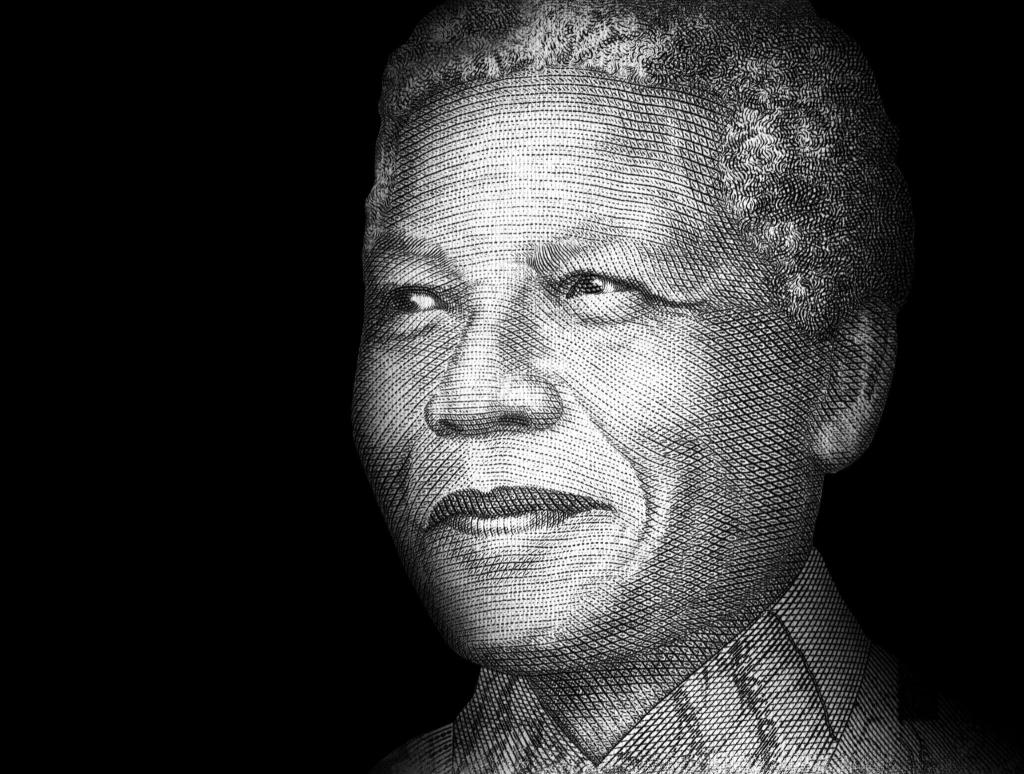
Nelson Mandela is the first black president of South Africa. But that’s just a Wikipedia fact. What we should think about Mandela is how well he lived his life, how he could heal his hating heart, and how he faced his fears despite life’s grueling setbacks and a prison term that would crush him and throw his dreams into an impossible pit.
His “Long Walk to Freedom” teaches how to be optimistic, how we learn to hate others, how a nation should act, and how to lit the kindness flame that burns in all our hearts. His life is a valuable book that one can learn if one opens the mind a bit. Here are the seeds that I value—
- 1)Courage and Fear are twins.
One fundamental error in our thinking is that we assume being courageous means no fear and showing a spartan face. But that’s far from true. Courage is coping with fear and waging a constant battle that we never win but only make sound peace with it.
It’s an honorable pledge that we take. Yet we cannot defeat. The example is the man himself we’re talking out. When Mandela was flying on a plane. The engine failed and everyone was in panic mode. His bodyguards were running around with fear. But Mandela was reading a newspaper with courage. But here’s the thing Mandela after the emergency landing admitted that there was a fear but he merely did not show it.
This shows that being courageous is a choice that we need to make and can never defeat like a big Hercules.
“Courage is resistance to fear, mastery of fear, not absence of fear—Mark Twain.”
- 2)Contradictions define life.
We never get
Either this or that
But
A choice hanging
In between.
We never get
Neither this nor that
But
A paradox moving
Up and down.
We never get
A personality or
An individuality
But
A docile identity
Buttered by both.
We never get
Kinky morals or
Dinky ethics
But
A badly blossomed conscience
Or deeply twirled dilemmas.
We never get
A hulky heart
or
A bony brain
But
Just a sad belly.
Ah—
Black or white?
I wish it were that simple.
—No black and white
This is a poem I wrote a while back that captures the idea well. Life is neither black nor white but grey. We need to accept the contradictions, the ifs, and buts, and tread along.
Nations accept this. For example, it cannot follow ruthless capitalism or ruthless socialism. Hence they balance out like China by following Market Socialism.
Life is an ethical dilemma with not a yes or no. But a yes-no. No wonder, Soren Kierkegaard remarked—
“I see it all perfectly; there are two possible situations — one can either do this or that. My honest opinion and my friendly advice is this: do it or do not do it — you will regret both.”
- 3)A literate tongue or pen matters a lot.
We know the famous quote of Mandela—
“Education is the most powerful weapon which you can use to change the world.”
But the idea of Mandela is much more than that. Education brings out the best in you. It’s the best weapon we can use to battle against the raging hate in our hearts and purify ourselves.
That’s why he inspired many prisoners to read and as they say— He turned the cell blocks to study halls and made Robben Island a university.
And education, Mandela believed, saves democracies, protects the rights of people, and tames unethical leadership of so-called good men and women. As hatred of immigrants, blacks, and the vulnerable are on the rise and people easily fall prey to a demagogue, education is the stick to control it.
and about education and personal development, here’s what Mandela says—
“Education is the great engine of personal development. It is through education that the daughter of a peasant can become a doctor, that the son of a mineworker can become the head of the mine, that a child of farm workers can become the president of a great nation. It is what we make out of what we have, not what we are given, that separates one person from another.”
Pick out that book on the kindle or if you prefer the old way, then the shelf.
Leader and Incentives
The classic expectation from a leader is to manage a faltering team and set them in tune. They expect him as a super motivator and even a relationship advisor. But what if the team has super “A” achievers and is motivated beyond the borderlines?
In that case, the one who can offer maximum incentives to the followers becomes the champion. When people get more than what they bargained for, they notice and follow the lead.
Originality
A lot of us assume that we need to have original ideas to write or have something truly novel to say.
If we live by this assumption, we never get anywhere. Any idea that we can possibly imagine was
already said by someone, perhaps just the way it is narrated might differ. What Sri Krishna in Bhagavadgita
told is just good summary of Upanishads. Godfather movie is a simple crime story that gets repeated in almost
every criminal business with a little bit of addition of Machiavellian morality. Whether it is a Beatles song
or a Bukowski poem, the lyrics and words just take different synonyms. Then why do we have to say or create
something? Andre Gide answers this.
” Everything that needs to be said has already been said. But since no one was listening, everything
must be said again.”
Energy Management
What really matters is how we manage energy in a day. Whether we accept it or not, energy, at least mental, is
a finite resource and that it depletes from the moment we wake up. Hence as we proceed in the day, it
becomes difficult to take better decisions or do hard tasks. Despite being very rational and having a ton
of great mental models under our belt, we will do stupid things and despite being motivated enough, we
push the deadlines for the simple reason that we don’t have energy left.
Track your energy resource and schedule your priorities for the day according to this plain fact. The
the general rule is to do cognitively taxing things and take important decisions first.
 Thy Vox