
Joy

Photo: iStock

To begin with, any sort of split in what we think, what we say, and what we do
creates unhappiness as it amounts to being untrue to your own self. The integration
of thoughts and words with actions is the first necessary step in contentment.

Next is the interpretation of the past. What meaning we provide to the past becomes
the key factor to what we get out of it in the present. Whether we make
regrets out of events or relish over the lessons that an incident has
given us shapes the individuality we create moment by moment.

Another noteworthy one is managing our relationships. You might be a social animal
or a solitude-seeking creature but our connections and ties with the people we love
is the foundation of peace. 90% of our Bad moods, and crappy feelings often are the result of
mismanaged relations more so when you have a deeper level of love with them.

Further, non-attachment no matter how cliched it might sound is very important for bliss.
Attachment to thoughts gives depression, to the body gives insecurities on a level you cannot
even fathom, and attachment to identity gives ego hurts, revenge, and so on.
The best way for non-attachment is given by Sri Krishna in Bhagavad Gita. He urges us to
give up the ownership of thoughts, words, and actions to god. This is actually a
very practical idea because putting the responsibility and the onus of our doings on
someone else (God here or some higher entity one believes in) relieves us of the consequences.
it frees us from the chains of accountability. That’s why house owners are more unhappy
than the people living on rent as the former is always concerned about the safety and security of the house.

Finally, how one tackles his or her free time is damn important. Most of the time we block
to rest and rejuvenate the mind and body but often we don’t have a plan for that.
we end up watching random recommendations of YouTube or Netflix algorithms only straining
the soul further. Finding out what we love to do, how to do them, and where to do them at our own pace
is the primary step in dealing with “Sunday Neurosis”.



Ambition

A goal in mind serves as a constant reminder for us to improve and up the game. It
nudges our minds to do something worthwhile and not settle for mediocrity in action.
Maybe it might create a better future or not, but it sure as hell amplifies our day-to-day
actions. Without the goal of beating down the former U.S.S.R., the U.S.A. wouldn’t have
dared to land on the moon. Suddenly by the grace of a good goal every engineer,
astronaut and scientist have a purpose that continuously challenges them
and forces them to create a short miracle every day.

Every great action touched by ambition creates work that would
give meaning and a cause to wake up to the alarm clock, More so
when capitalism is alienating man from his job (Marx) and turning him into a cog in the machine.


British India and Hegel

Photo :iStock

Hegel considered idea or consciousness as the moving force of history and respective social changes.
The content of our mind dictates the destiny of the development of the nation. And he also noted
that social institutions of a country too are merely the reflection of ideas backing them
behind the curtains.

This is obvious because all the tectonic shifts in history be it the American, French, and Russian revolutions,
Renaissance and reformation, Enlightenment, and Industrial-scientific advancements are the brainchildren
of consciousness and the products of thought. Of course, here we are not undermining the ambitions, dream projects, and territory-expanding visions of kings, queens, and military generals. Simply put, consciousness and its quality
no matter how subjective that term may be, push the needle forward, for better or worse.

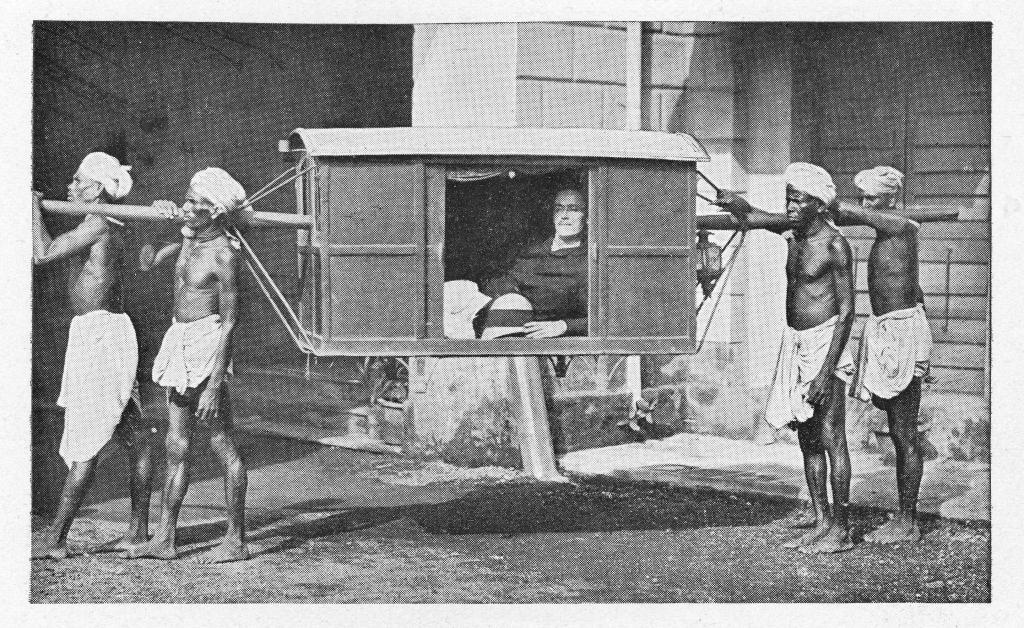
Considering this the biggest damage done to India by the British is the incapacitation and the wounding of our consciousness.
Macaulay’s education, Divide and rule policy to raise a chasm between Hindus and Muslims, Casualization
of aping of the west and its values, Racism, and the Worshipping of Victorian morality (LGBT hatred to be specific here),
Paternal culture of bureaucrats, Linguistic hierarchy based on English, and caste consolidation by census and
deliberative administrative practices are a few ways through which the psyche of nations’ mind was disturbed
and changed in a derogatory way for which no amount of reparations is sufficient to undo the harm.


Reality and Escape

Ayn Rand in her famous essay ” The Objectivist Ethics” writes the following –

” Man is free to choose not to be conscious, but not free to escape the penalty of unconsciousness: destruction.”

With the gift of free will, we can willingly choose to evade reality but we cannot really escape from its
dire consequences. In India, the reality of rural alienation, poor governance, and the trampling of tribal rights
in the name of development was deliberately pushed aside but then we paid the price when extremism, Naxalism, and separatism hit us.
Climate change too is the reality and the big elephant in the room that we now are brushing aside
but the heatwaves, cyclones, landslides, and other such extreme weather events cannot hide in the closet.

Even in life, a problem once surfaced will not go away just because we have chosen not to pay attention to it.
the disease goes away only when the body gets treatment. So, postponement only delays and worse amplifies the problem.


Crowd, the Omnipresent, the Omnipotent and the Omniscient (Essay)

Image by 愚木混株 Cdd20 from Pixabay

For so many of us, the crowd is the god. We don’t know much about the final judgement day that awaits us for the sins we do on earth but feel the “judgement” of the crowd and its beating on our backs to correct any “deviant” act and morality every day.

After a while, the thought policing of the crowd makes us a unidimensional, unidirectional, and unidentified man. We become the loyal dogs of our tribe. Centuries of conditioning combined with religious sanctions and social ostracism imprinted the need for social approval and acceptance deep in our neurons. The validations we crave in the name of likes, retweets, comments, and hashtags on social media are testimonials of this fact.

The initial premature tribalism later evolved into glorified nationalism and totalitarian rules in Europe and other parts of the world. The popping up of “Yes-Masters” in the crowd killed millions of Jews. This is mainly because the crowd acquires unthinking and participates in the acts of evil, without not being necessarily evil. ( Hannah Arendt covers this in Eichmann in Jerusalem: A report on the Banality of Evil. Can one do evil without being evil?)

If the crowd accepts something as pious then it is the iron law. Few souls opposed it and got the punishment. Socrates was accused of impiety (desecration and mockery of divine objects) and was killed for his Parrhesia (Frank Speech), just to give a well-known example.

Forget about challenging groupthink, the normal choices about food, clothing, movies, books, and music are judged left and right. Conformity is rewarded and nonconformists are branded as “different”. The news reporting agencies too know this. Hence, the fourth estate also never crosses the line.

Immigrants face this problem a lot. They are supposed to “Fit in” and any misfits preaching multiculturalism are a nuisance in society. And the whole concept of a “Melting pot” is a metaphor for majoritarianism. James Baldwin says this— Who wants to be melted down? And melted down to what? It’s a problematic metaphor. You’ve got to tell the world how to treat you. If the world tells you how you are going to be treated, you are in trouble.”

It’s unfortunate that the crowd took the place of god. However, education can be a good tool to change this ( Here, it means, Paideia. The deep education rather than cheap schooling). Leo Buscaglia puts it in the way I want it to be—

“Education should be the process of helping everyone to discover his own uniqueness, to teach him how to develop that uniqueness, and then to show him how to share it because that’s the only reason for having anything.” Such kind of educational transformation can be starting place. It also raises the truth tolerance levels of society and taps into the “wisdom of the minority”(Frederick Douglass).

A perfect end here comes from Emerson—

“ Masses are rude, lame, unmade, pernicious in their demands and influence and one must not concede anything to them, but to tame, drill, divide, and break them up, and draw individuals out of them.”


Mastery

Hitting the peak in any domain or area mandates more than just 10,000 hours of investment.
A timely feedback system, and a supportive training program with the philosophy of
kaizen (continuous small incremental improvements), and the readiness to
coming out of your comfort zone is critical for the outcomes.


Habits

Ultimately what habits build is an identity for you.
All the opinions we have, stories we believe in, narratives we tell ourselves,
dreams and futures we seek, circumstances we are trapped in, and how we take forward the hero’s journey can all be traced back to the processes and systems we have built around the habits we abide by.


Realization

What we often forget is people change over time. The high school bully might
have become a saint, the co-worker we have had no longer gossip behind our backs,
the college mate who had just one mission i.e. calling you by odd names
might have forgotten your name. Holding a past frame of reference in the
the present doesn’t let us forge new friendships and fellowships.