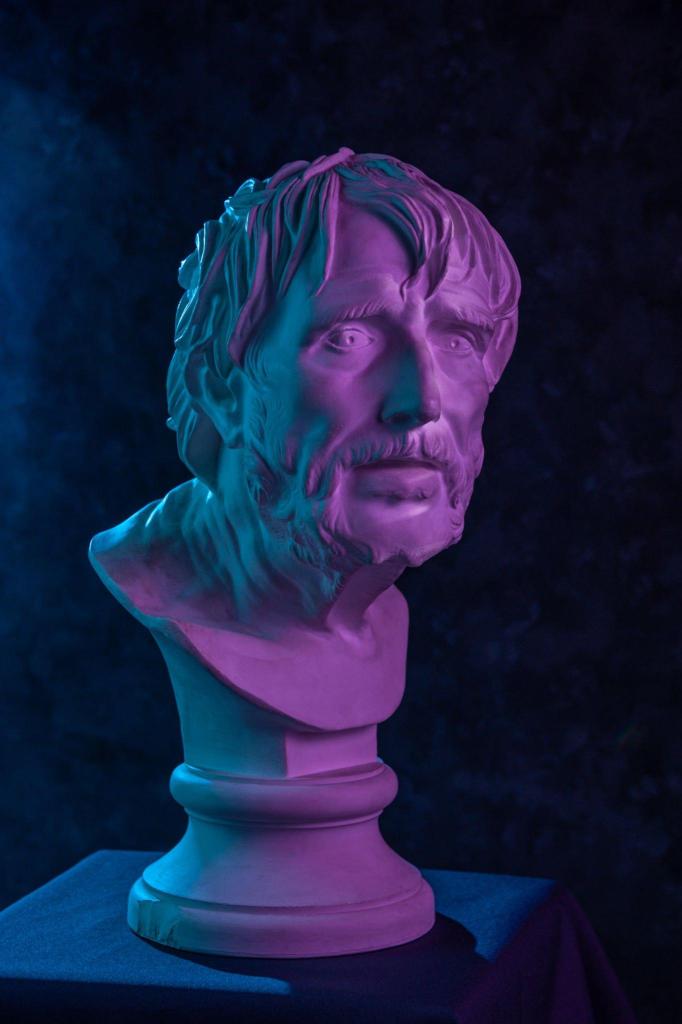
Seneca

Photo:iStock

My brother gave me “On the shortness of life” book to read a while ago. This book though a short one changed the course of my river. Seneca’s brilliant words pierced like a thunderbolt though I’m not a stoic as such.

I never knew that there was such a thing called as the “Art of living” until I met this great thinker. It inspired me, it brought an existential crisis to me, and in a way crucified and resurrected me.

And it also brought a sense of urgency to my hibernated-slumber life. And every page of the book washed my soul and put me in deep meditation and contemplation. Here are a few of them for you to burn the flame—

  • 1)Life is not short.

This sounds contradictory to the title of the book but this is the first truth that Seneca hammers on your head. He says—

“It is not that we have so little time but that we lose so much. … The life we receive is not short but we make it so; we are not ill-provided but use what we have wastefully.”

We waste so much time on things that don’t matter or on things that don’t matter now. We feed on Insta posts, drink YouTube scrolls, and sleep on Netflix-ing. If that’s not enough, we binge-envy on others and reflect for far too long on why life sucks though we exactly know why it does.

In fact, we tik tok our lives and finally think on the deathbed—How has life gone by?

That’s why Lucius Annaeus Seneca pushes you to grab hold of your time and act like a mortal who is a simple slave to the silly fates.

  • 2)What is the proof for a long life?

“Often a very old man has no other proof of his long life than his age.”—Seneca.

This is a saintly saying if you think about it. Long life doesn’t mean we add more numbers to our life but add more meaning to them. Consider Indian freedom fighter Bhagat Singh who was hanged at 23 or Bruce Lee who died due to Cerebral edema(That’s what Wikipedia says) at 32, they didn’t become oxygenarians or nonagenarians but their life was well spent.

Both changed the world in ways we cannot. And that matters a lot. The mere existence and sleepwalking to our tombs won’t do any good either to us or anybody.

Every living minute of our life should have some wonder and awe like a shining star.

  • 3)Choose your parents

I’m talking about intellectual parents, not birth parents. Seneca says that we can choose to be educated by brilliant minds and great thinkers of history.

History is full of philosopher kings and queens, realists, and stellar rebels who can teach us a lot. In other words, you can choose your mentor and be a mentee by sitting in libraries or swimming in the pools of wisdom.

Pick the classics and have talks with Plato, Aristotle, Kant, Buddha, Confucius, Lao Tzu, Hannah Arendt,and Simone de Beauvoir and forge yourself under their guidance and light.

“You should rather suppose that those are involved in worthwhile duties who wish to have daily as their closest friends Zeno, Pythagoras, Democritus and all the other high priests of liberal studies, and Aristotle and Theophrastus. None of these will be too busy to see you, none of these will not send his visitor away happier and more devoted to himself, none of these will allow anyone to depart empty-handed. They are at home to all mortals by night and by day.”—Seneca.

This is the true “Walking with the dead,” we all should do.
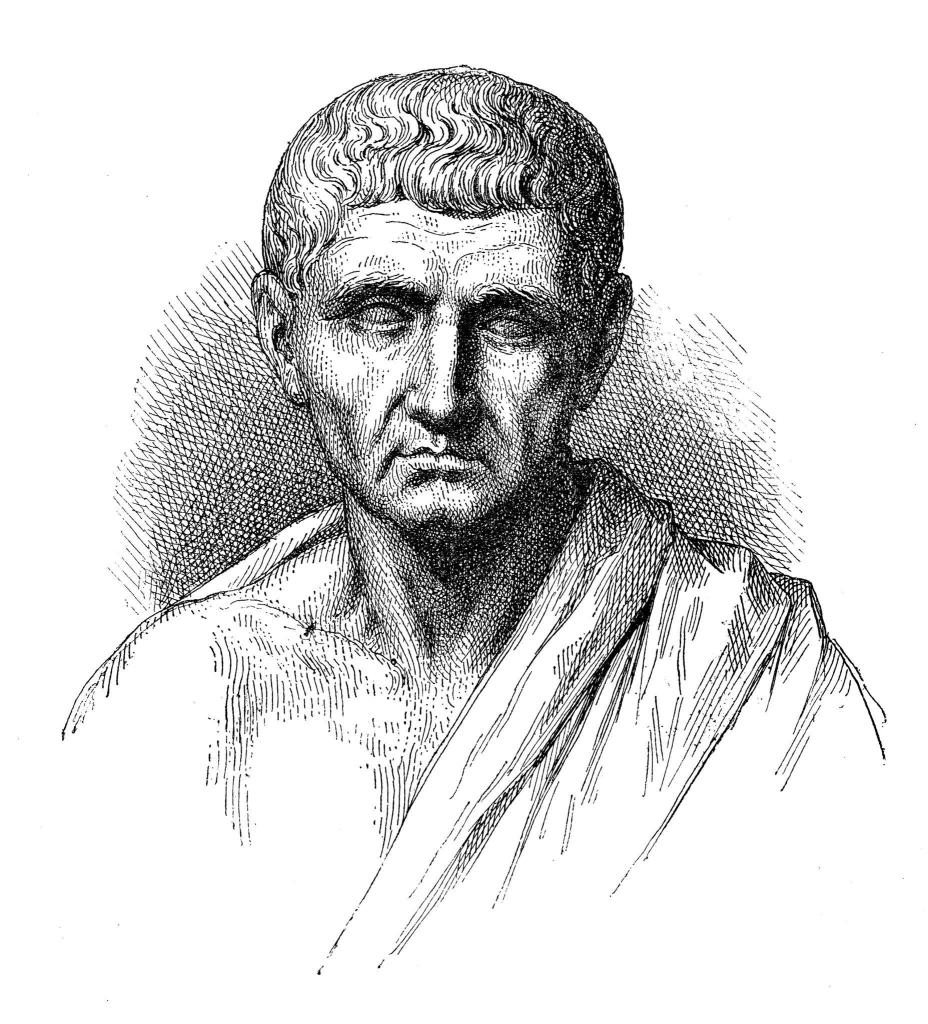

The Aristotle code in 3 sayings.

Photo:iStock

Aristotle, the greatest student of Plato and the man who tutored the famous Alexander can teach us a lot. He is the father of many disciplines—Logic, Political Science, Zoology, Rhetoric, and a whole bunch of others.

And Aristotle is probably the greatest philosopher of all time and a polymath who surpasses all and hence a worthy man to look into. Let us dive in—

  • 1)Golden Mean in life

“Monks, these two extremes ought not to be practiced by one who has gone forth from the household life. There is an addiction to indulgence of sense-pleasures, which is low, coarse, the way of ordinary people, unworthy, and unprofitable; and there is an addiction to self-mortification, which is painful, unworthy, and unprofitable.
Avoiding both these extremes, the Perfect One has realized the Middle Path; it gives vision, gives knowledge, and leads to calm, to insight, to enlightenment.”—Buddha.

Aristotle and Buddha have something in common. That is the Middle way or the Golden mean. It is a powerful spiritual tool and a practical way to live life.
The mean path says to avoid extremities in life. Not to be a Hippie avoiding life nor a Materialist who’s sucked into life. Not to be a Moralist who doesn’t care about money nor a Capitalist whose life is run by dollars.

In life, not to show cowardice or rashness but a sign of reasonable courage, And balancing passions and reality. The idea is neither to be in excess nor deficiency but moderation.

Next time, someone snaps at you, don’t be silent or dynamite exploding on him/her but deal with it with reasonable disapproval.

  • 2)What is good parenting?

“Those who educate children well are more to be honored than they who produce them; for these only gave them life, those the art of living well.”—Aristotle.

The Greek thinker opines that good parents educate children and that’s the only property that they can give which is worthwhile. A good inheritance is worthless unless your daughter is a woman of character and has prudence and probity.

Parents should teach what a good life is and how to be more empathetic and avoid being envious of others. And how to be more courageous, intelligent and compassionate.

A good education imparts humility and many virtues that act as a shield to evil vices around us. It shows how big a responsibility being a parent is and what matters to a child’s good governance of his life.

  • 3)Intellectual Humility

“The more you know, the more you know you don’t know.” —Aristotle.
Bertrand Russel, who’s another giant head, wittily said that the stupid are cocksure while the intelligent are full of doubt.

Once you have a cultured tongue and a reasonable amount of ideas in your head, that should not make you arrogant. We mortals can never have knowledge that is full and complete. The more we empty the cup, the more we can fill as Bruce Lee would say. Despite so much advancement in science, we could not even unravel the nature of any single atom!

We are still 90% blind to reality and could just figure out some basic things to live.

Another part is to admit we are wrong. Graciously admit where you went wrong and how miscalculated the estimates and move on. Only cowards never accept the mistake. The brave and the wise know that out of 10 things we do, rarely does the number of correct cross 1.

Still, doesn’t have the guts? No problem, at least be the criminal in your court of conscience and do the inner sentence.