The Plant that refused to die (Poem)

The sun asked the little petals
to surrender.
Winds were ready
to write the obituary column.
Roots too tired
to venture in the desert soils.
Rain — 
it’s been 3 years.
Fellow pals
gave up a long time.
The sky and the earth thought
another day, another death.
there’s little hope
in the bony stem
if you ask me.

Yet
the lad
was laughing.
and taught me
more than any wise book
or the enlightened mystic.

When the rain
finally fell,
the plant
cried in silence
and told the flower —
I knew it.

Is there nobility in suffering?

Definitely not. Being a Dostoevskyian is sick and saddening. Why should any suffering have meaning at all? And we never search for meaning while we are happy. Is it to accept the helplessness and then seek some pride in it?

Friedrich Nietzsche says that what doesn’t kill us makes us stronger. But suffering rarely made any men stronger. Either they get used to it or become egotistical to accept that they too are weak and can weep.

Even after the Nth time, pain cripples us but humanity and so-called self-advertised strong men find it hard to swallow it.

This has a negative consequence—No one is seeking out help and is crushing their lives simply in the name of being stoic. This is a disease and a plague for us all.

They are dumping the waste into the subconscious and growing their Jungian “shadows” and society is raising sociopaths in the name of strong Spartans.

Acknowledging this can heal the sore souls and spoiled spirits. It’s time to stop searching for meaning in martyrdom and affection in affliction.


Life and Meaning

At some point in our lives, probably after a tragedy or so, for at least a brief moment, one stops and asks the damn question- What is the meaning of this life? Our consciousness somehow cannot fathom this wonderful existence without a grand purpose behind it. Maybe because we never trust someone especially when they give a free gift like life here without scheming something fishy. We always expect something in return when one does charity, despite what people say. Help always demands acknowledgment even if it is a humble thank you but how can god or someone up above give away something precious away freely or with a massive discount like in a china shop to us? The ego’s suspicion expects a solid answer for all this.
Speaking strictly from egoism, life is neither a blessing nor a charity given by someone. We are part of creation that somehow for some wild reason developed metacognition and consciousness that developed a fragile ego that could for a brief moment in time separate itself through an illusion and think that it is different and great. For the existence, we are in no way different from an asteroid moving randomly in space.
Arthur Schopenhauer for this exact reason warned us not to enquire about meaning in life, as it leads to disillusionment as everything in life and everything we value is transitory and vanishes away like a soap bubble as soon as we try to grasp and grab it.
It is correct. As long as we are slaves to time, change, and decay. It is not worth it. And moreover, what does one do even if he or she knows the purpose and meaning of his/her life? We get satisfaction and die. Hence we just long for satisfaction which roughly translates to the release of chemicals in the brain. How is it different from the satisfaction we get after watching a TikTok video or a YouTube short?
In short, one should not waste this brief time on earth over this useless question when it is nothing but ego playing a trick on us for mere chemical reactions.


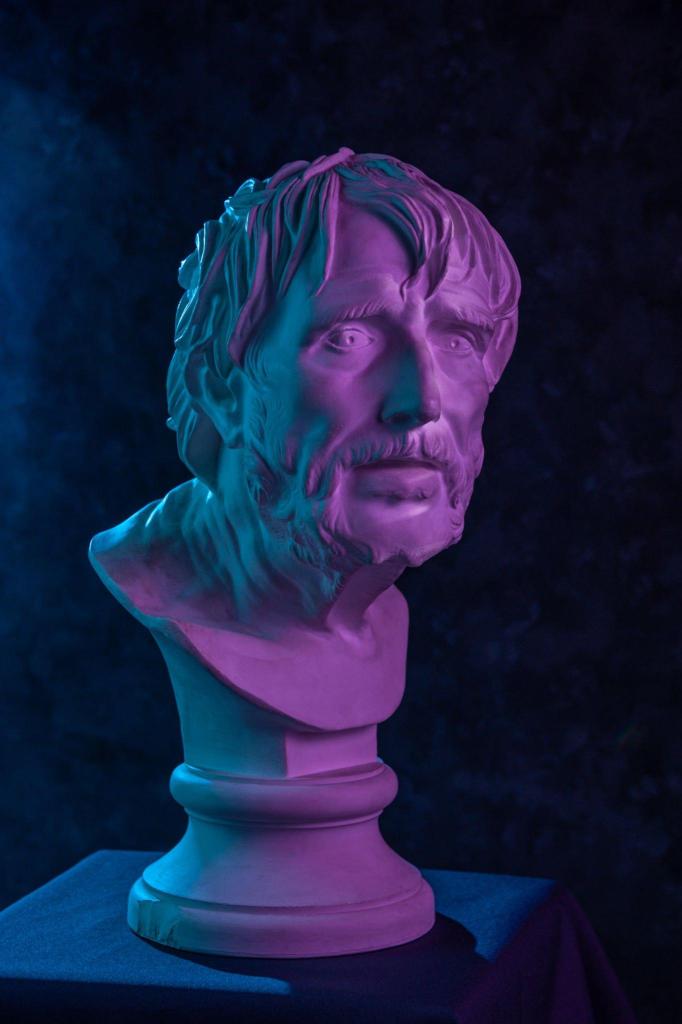
Seneca

Photo:iStock

My brother gave me “On the shortness of life” book to read a while ago. This book though a short one changed the course of my river. Seneca’s brilliant words pierced like a thunderbolt though I’m not a stoic as such.

I never knew that there was such a thing called as the “Art of living” until I met this great thinker. It inspired me, it brought an existential crisis to me, and in a way crucified and resurrected me.

And it also brought a sense of urgency to my hibernated-slumber life. And every page of the book washed my soul and put me in deep meditation and contemplation. Here are a few of them for you to burn the flame—

  • 1)Life is not short.

This sounds contradictory to the title of the book but this is the first truth that Seneca hammers on your head. He says—

“It is not that we have so little time but that we lose so much. … The life we receive is not short but we make it so; we are not ill-provided but use what we have wastefully.”

We waste so much time on things that don’t matter or on things that don’t matter now. We feed on Insta posts, drink YouTube scrolls, and sleep on Netflix-ing. If that’s not enough, we binge-envy on others and reflect for far too long on why life sucks though we exactly know why it does.

In fact, we tik tok our lives and finally think on the deathbed—How has life gone by?

That’s why Lucius Annaeus Seneca pushes you to grab hold of your time and act like a mortal who is a simple slave to the silly fates.

  • 2)What is the proof for a long life?

“Often a very old man has no other proof of his long life than his age.”—Seneca.

This is a saintly saying if you think about it. Long life doesn’t mean we add more numbers to our life but add more meaning to them. Consider Indian freedom fighter Bhagat Singh who was hanged at 23 or Bruce Lee who died due to Cerebral edema(That’s what Wikipedia says) at 32, they didn’t become oxygenarians or nonagenarians but their life was well spent.

Both changed the world in ways we cannot. And that matters a lot. The mere existence and sleepwalking to our tombs won’t do any good either to us or anybody.

Every living minute of our life should have some wonder and awe like a shining star.

  • 3)Choose your parents

I’m talking about intellectual parents, not birth parents. Seneca says that we can choose to be educated by brilliant minds and great thinkers of history.

History is full of philosopher kings and queens, realists, and stellar rebels who can teach us a lot. In other words, you can choose your mentor and be a mentee by sitting in libraries or swimming in the pools of wisdom.

Pick the classics and have talks with Plato, Aristotle, Kant, Buddha, Confucius, Lao Tzu, Hannah Arendt,and Simone de Beauvoir and forge yourself under their guidance and light.

“You should rather suppose that those are involved in worthwhile duties who wish to have daily as their closest friends Zeno, Pythagoras, Democritus and all the other high priests of liberal studies, and Aristotle and Theophrastus. None of these will be too busy to see you, none of these will not send his visitor away happier and more devoted to himself, none of these will allow anyone to depart empty-handed. They are at home to all mortals by night and by day.”—Seneca.

This is the true “Walking with the dead,” we all should do.